Mansea Metal & Mid-Western Buildings to Showcase at The 41st Annual Central Kentucky Home & Garden Show

"How long does a metal roof last?" is one of the first questions homeowners ask, whether they already have one or they're still deciding between metal and asphalt. The answer depends on a handful of specific factors, and understanding them tells you a lot more than a single number would.
The range homeowners hear most often, 40 to 70 years, comes from the Metal Roofing Alliance and holds up across the industry for properly installed steel roofing systems. That's roughly two to three asphalt roof replacements packed into the lifespan of a single metal one.
That range is wide because "metal roof" covers more than one type of system. A standing seam roof, with its concealed fasteners and interlocking panels, tends to land at the top of that range and sometimes exceeds it. An exposed-fastener panel roof, where screws pass through the face of the panel, is still far more durable than asphalt, but it depends more on maintenance to protect the fasteners and washers that seal each penetration point over time.
For a look at how Mansea Metal's panel options compare, our Roofing & Siding page breaks down the profiles by system type.
More than any other factor, how the roof goes on determines how long it lasts. Improperly sealed seams, under-driven fasteners, and poor flashing work are the most common reasons a metal roof fails early, regardless of how good the panels themselves are. This is also why it's worth working with an installer familiar with the specific panel system going on your home.
Homes across Kentucky, Illinois, and Ohio deal with humid summers, freeze-thaw winters, and the occasional hailstorm, all of which test a roof differently than a dry, mild climate would. None of that puts a quality metal roof outside its expected lifespan, but it does make routine inspection more valuable here than it would be somewhere with milder weather.
This is the one variable homeowners actually control day to day. A roof that gets cleaned and checked on a normal schedule can reach the top of its expected range. One that never gets looked at is more likely to develop small issues, like a lifted seam or a corroding fastener, that eventually shorten its service life. Maintenance doesn't add years beyond what the roof was built for. It protects the years that are already there.
A few habits do most of the work when it comes to protecting a metal roof's lifespan:
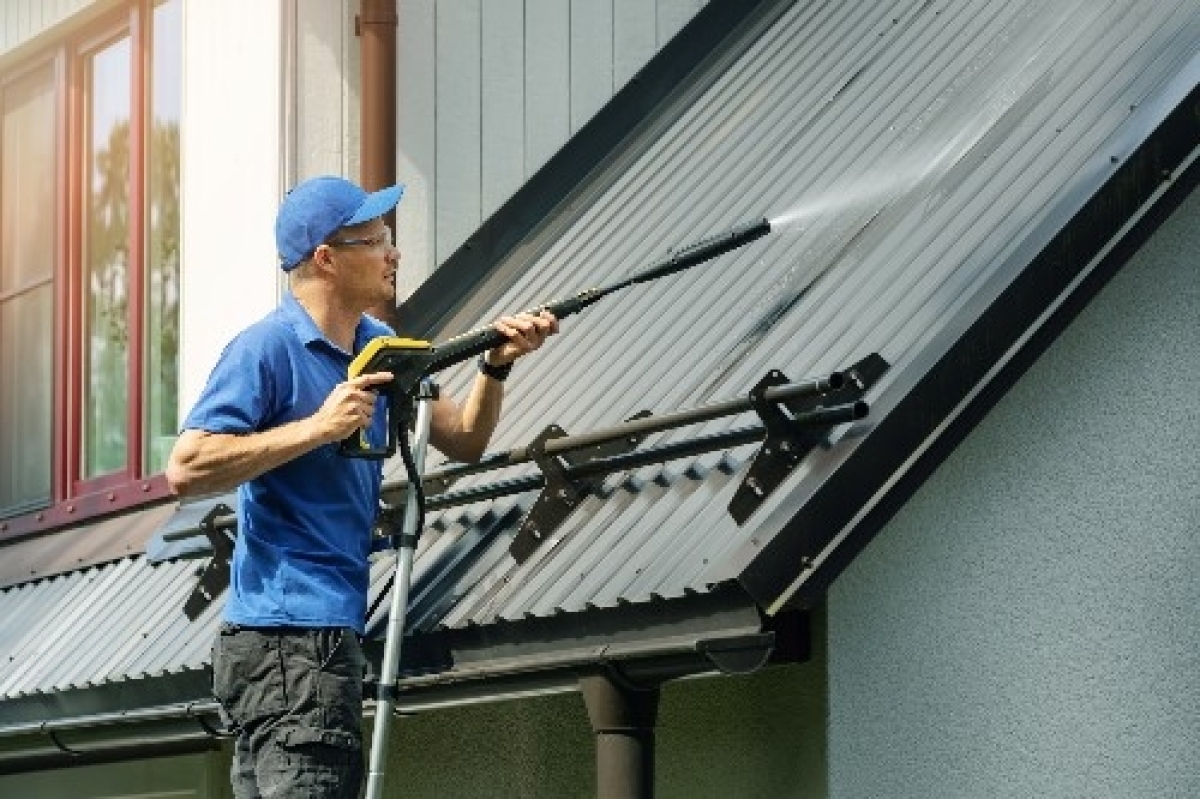
Cleaning is simple and doesn't need to happen often: twice a year, in spring and fall, is enough for most homes. A garden hose and a mild, non-abrasive cleaner handle it, working from the top down without you ever having to step foot on the roof . Skip the pressure washer, which can force water under seams, and skip bleach or abrasive scrubbers, which can damage the coating.
For the full cleaning and inspection routine, including what to look for and when to call a professional, see our guide on what metal roof and siding care actually looks like.
If you're weighing metal against asphalt, the lifespan gap is really a cost-per-year comparison. An asphalt roof at 20 years and a metal roof at 50 years cost very different amounts once you account for the fact that the asphalt roof gets replaced two or three times over that same stretch, and each of those replacements carries its own labor and tear-off costs on top of materials. A metal roof's higher upfront price is spread across far more years of service, with a fraction of the maintenance asphalt requires along the way.
That value shows up at resale, too. Homeowners typically recoup 50% to 75% of a metal roof's cost at resale, according to the Metal Roofing Alliance, and a quality metal roof can lower homeowners' insurance premiums in many states as well.
Homeowners across Kentucky, Illinois, and Ohio choosing Mansea Metal get panels manufactured locally, finished with Sherwin-Williams WeatherXL™ Finishes in more than 20 color options, and backed by a warranty built around exactly this kind of long-term performance. Our residential solutions page walks through panel options by project type if you're still comparing.
Most metal roofs don't need replacement on a set timeline. Watch for signs instead: widespread rust that touch-up paint can't keep up with, seams or fasteners that no longer hold, or panels that have taken structural damage from a storm. A roof showing one or two of these issues usually needs a repair, not a replacement. Widespread issues across multiple panels are the signal to start planning ahead.
Yes. Metal roofing is one of the few home improvements that tends to add more value than it costs, and buyers increasingly search for it specifically because of the low maintenance and long lifespan. It's also a selling point that's easy to explain to a buyer, since "40 to 70 years" is a concrete number in a way that "recently maintained asphalt" isn't.
No, not when installed correctly. Leaks on metal roofs almost always trace back to a specific point: a fastener, a flashing detail, or a seam, rather than the panels themselves failing. That's why installation quality and periodic inspection matter more for leak prevention than the metal itself.
The most common complaint isn't performance, it's upfront cost. Metal roofing costs more to install than asphalt, and that is the main reason some homeowners hesitate, even though the lifetime cost usually favors metal. Beyond cost, the next most common issue is poor installation, not the material itself, which is why choosing an experienced installer matters as much as choosing a quality panel.
See how a color and profile look on your home with our Color Visualizer, or contact your nearest Mansea Metal location in Kentucky, Illinois, or Ohio for a free quote.